Recall Remediation Management Application Design

Increase remediation response time by 35%

PROJECT AT A GLANCE Role: Lead Product Designer (End-to-End) Timeline: 6 months Team: 1 Product Manager, 1 Architect, 4 Frontend/Backend Engineers, 1 QA Lead Forecast Metric: Improve recall acknowledgement by 100% after launch Improve remediation response time by 35% after launch

Client

BD

Industries

Healthcare

Services

Visual Design UI & UX Design UX Researcher UX Product Manager Front-End Engineer

Date

January 2024

Home page
Home page

THE PROBLEM Biomeds face a confusing, frustrating experience managing multiple recall inspections for 2.4M devices. This poor usability is causing significant user dissatisfaction, leading to negative feedback that threatens key business relationships with hospital executives.

THE GOAL Design a net-new recall management portal that unifies fragmented workflows for 2.4M devices, automating compliance and delivering an intuitive experience for biomed and internal staff.

THE OPPORTUNITIES Build a scalable portal from the ground up to eliminate manual processes, reduce customer dissatisfaction, and strengthen hospital executive relationships through a single, efficient interface.

Process

Led end-to-end UX design Conducted research and usability testing Designed flows, UI, and prototypes Partnered with Product, Engineering, Regulatory I analyzed quantitative data, including 650 monthly support calls, 950 service orders, and 7,900 emails, to validate the scale of the problem and prioritize design decisions. Using these insights, I developed journey maps and process flows that exposed critical system gaps in the current state experience. From research to solution, I translated findings into wireframes and interactive prototypes, iterating based on stakeholder feedback to deliver a unified interface that automates compliance data capture and reduces manual effort for both field and internal teams.

Research

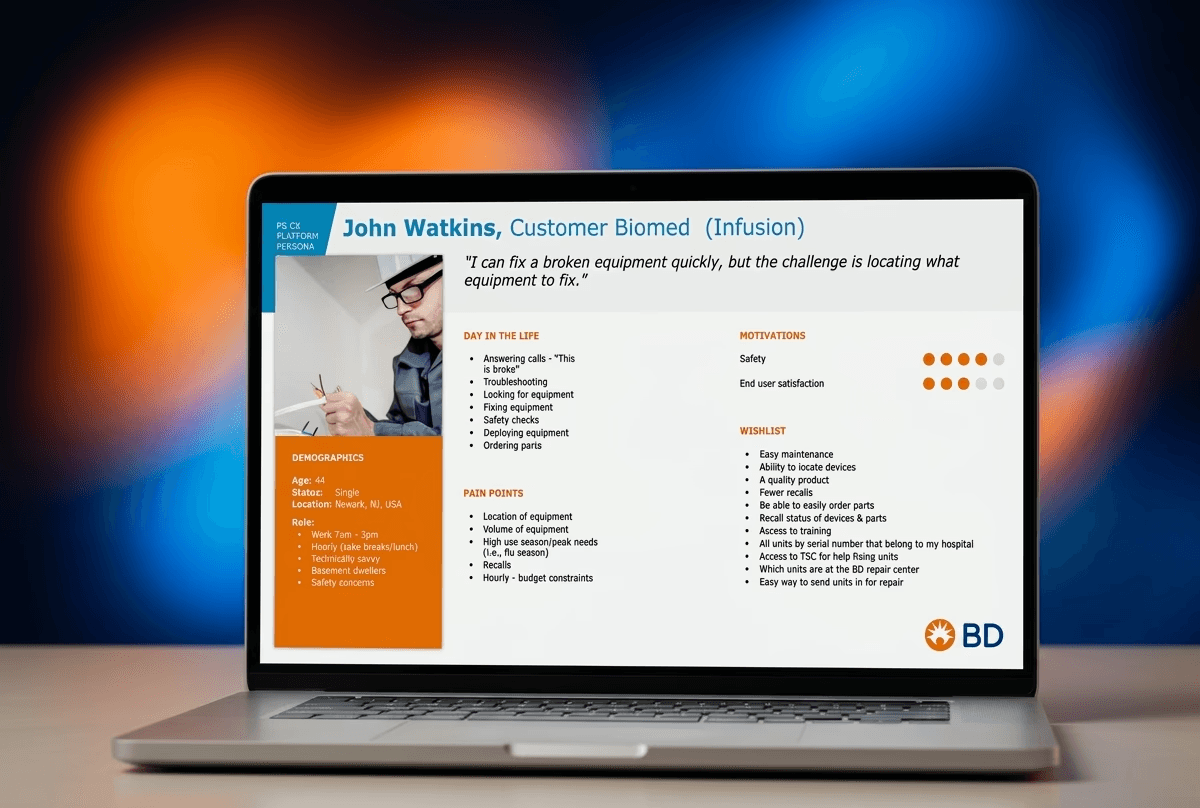
I identified 3 major persona categories to consider for this project and defined personas for each of the roles within these categories. External customer: Hospital BioMed /3rd party BioMed Internal Associates: Customer Account Managers, Recall Team Members, Project Managers, Professional Services Team, Service Technicians Vendor: 3rd party remediation confirmation vendor

Current State Journey Mapping

To improve the process for biomed customers managing product recalls, I mapped out the current steps they take. This "journey map" identified user pain points. I then compared this to an ideal future process to find gaps in systems, procedures, and technology. I assessed potential improvements based on how easy they would be to implement versus how much impact they would have. This helped us identify simple changes that would yield significant benefits ("quick wins"), and eliminate steps that took a lot of effort for little value, guiding our strategy toward a more efficient and effective recall remediation experience

Key metrics from internal and external users

Research

I identified 3 major persona categories to consider for this project and defined personas for each of the roles within these categories. External customer: Hospital BioMed /3rd party BioMed Internal Associates: Customer Account Managers, Recall Team Members, Project Managers, Professional Services Team, Service Technicians Vendor: 3rd party remediation confirmation vendor

Current State Journey Mapping

To improve the process for biomed customers managing product recalls, I mapped out the current steps they take. This "journey map" identified user pain points. I then compared this to an ideal future process to find gaps in systems, procedures, and technology. I assessed potential improvements based on how easy they would be to implement versus how much impact they would have. This helped us identify simple changes that would yield significant benefits ("quick wins"), and eliminate steps that took a lot of effort for little value, guiding our strategy toward a more efficient and effective recall remediation experience

Key metrics from internal and external users

Design

Design
Design

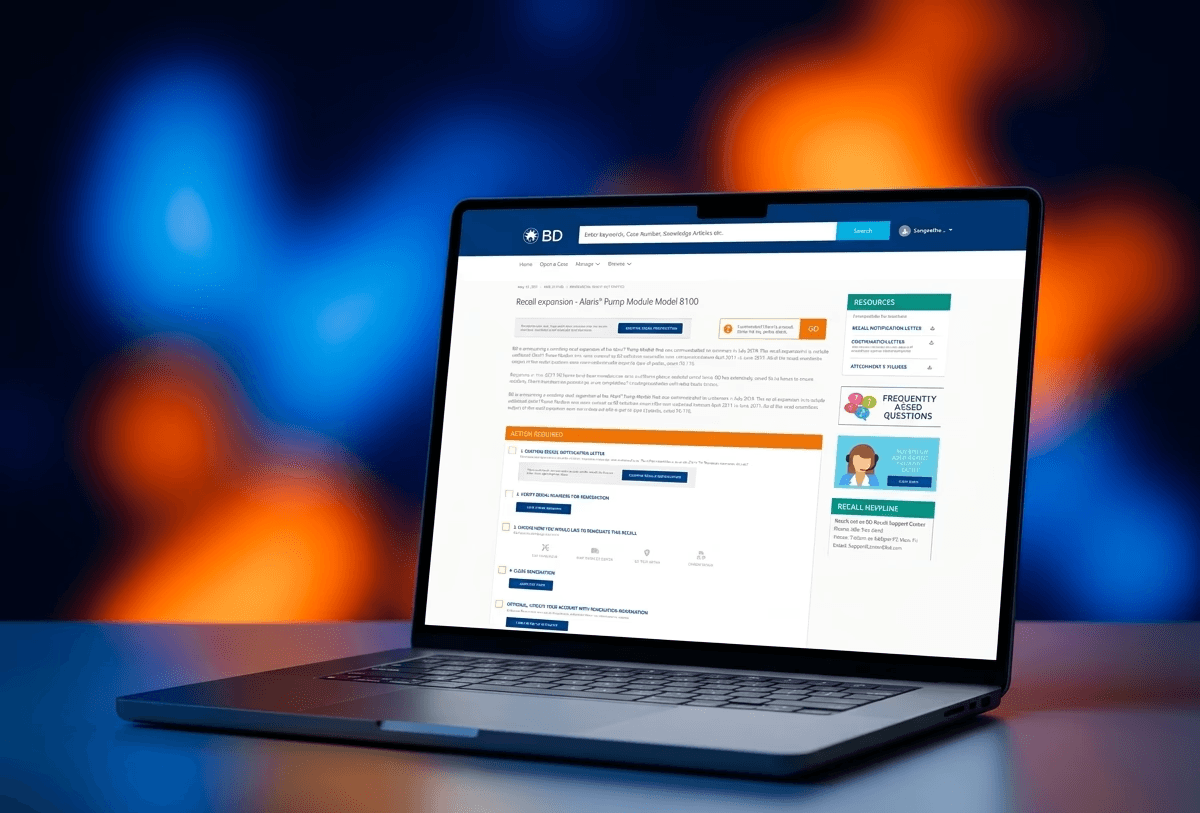
For Phase 1, I designed a simple tabular dashboard with step-by-step indications on where the customer is at in the device recall management process. I also allowed quick action CTAs in the dashboard to take immediate action for each step. This was a result of direct customer insight. I also designed a Recall Details page which provided the full details of the recall, with the Recall ID, date posted and affected devices customized to the account. Within this page, was a panel that provided step-by-step instructions on how to proceed with the recall, starting with confirmation letter acknowledgement with e-Sign, then verification of devices and choosing from 4 remediation options for the devices. Forecasted Impact: 35% decrease in recall related calls and emails 90% customers confirm recall notification within 1 month Downloadable Device verification option saves hours for users

TRADE OFF SCENARIO One of the design trade off I had to do here was the choice between Simplification vs. Comprehensiveness A streamlined interface is easier for users to navigate, reducing confusion and cognitive load. The design focuses on intuitive steps for common remediation actions like replacements or software updates. The benefit is high user adoption and fewer support calls. I decided to not support every unique edge case as it would add complexity to the user interface, potentially making the process feel cluttered or overwhelming for typical users.

If your question is "Can this person drive outcomes in messy, real-world systems?" The answer is Yes! I've spent 10+ years making healthcare, fintech and e-commerce technology feel less like a system and more like a conversation. If that's the kind of designer you've been looking for, you just found her.

If your question is "Can this person drive outcomes in messy, real-world systems?" The answer is Yes! I've spent 10+ years making healthcare, fintech and e-commerce technology feel less like a system and more like a conversation. If that's the kind of designer you've been looking for, you just found her.

If your question is "Can this person drive outcomes in messy, real-world systems?" The answer is Yes! I've spent 10+ years making healthcare, fintech and e-commerce technology feel less like a system and more like a conversation. If that's the kind of designer you've been looking for, you just found her.