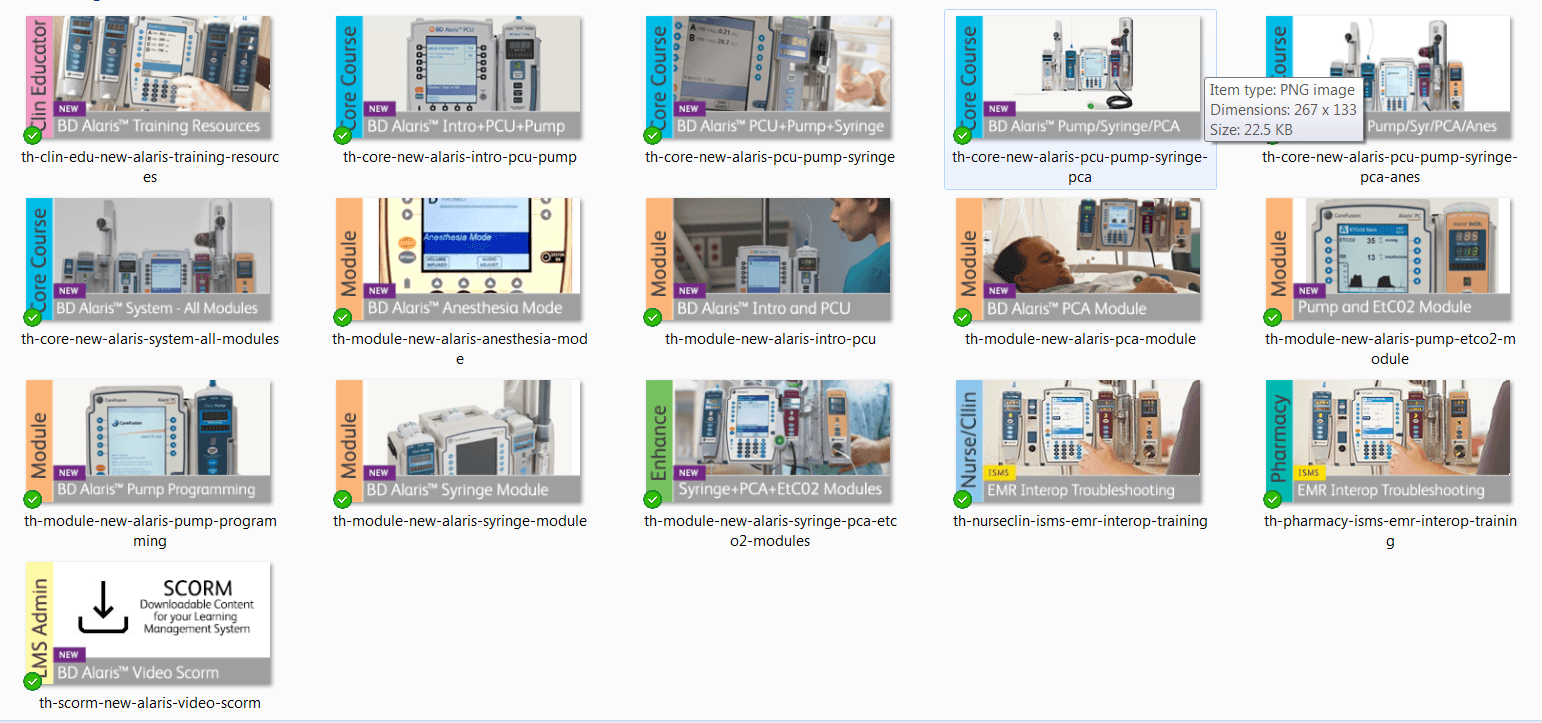
From Friction to Flow: Redesigning the LMS Experience
Driving adoption across 50,000+ users.
I led this project end to end as the sole designer, researcher, and developer. Through user research, I identified key drop-off points and used those insights to redesign the portal. The new experience streamlined onboarding, improved navigation, and made coursework and certificates easily accessible. I then built and implemented the front end, delivering a solution now used by 50,000+ learners. The redesign significantly reduced support calls and emails, transforming a high-friction platform into one users can navigate independently.
Client
Healthcare Education
Industries
Education Services
Services
UX Research Product Design Front-End Development Print Design
Date
April 2022

THE PROBLEM The LMS portal's unreliable registration flow, poor course discoverability, incomplete profile tracking, and delayed certificate delivery created a frustrating experience for users. These friction points generated 300 support emails and 6 hours of daily call volume, placing a significant operational burden on the support team.
THE GOAL Redesign the LMS portal experience to eliminate registration barriers, surface relevant training quickly, give users accurate visibility into their progress and completed coursework, and ensure timely certificate delivery. Success would be measured by a meaningful reduction in support contacts and improved user task completion rates across the platform.
THE OPPORTUNITIES With 50,000 active learners, even incremental improvements to the platform's usability could reclaim thousands of hours in lost productivity and significantly reduce support overhead. Fixing these foundational experience gaps represented a chance to transform the LMS from a source of daily frustration into a trusted, self-sufficient learning tool and demonstrate measurable business impact through UX improvements.
Process
Conducted end-to-end UX research and design on an LMS portal, from heuristic evaluation and user interviews to design implementation and usability testing. Shipped a redesigned experience to 50,000+ users, increasing adoption and reducing daily support calls and emails.
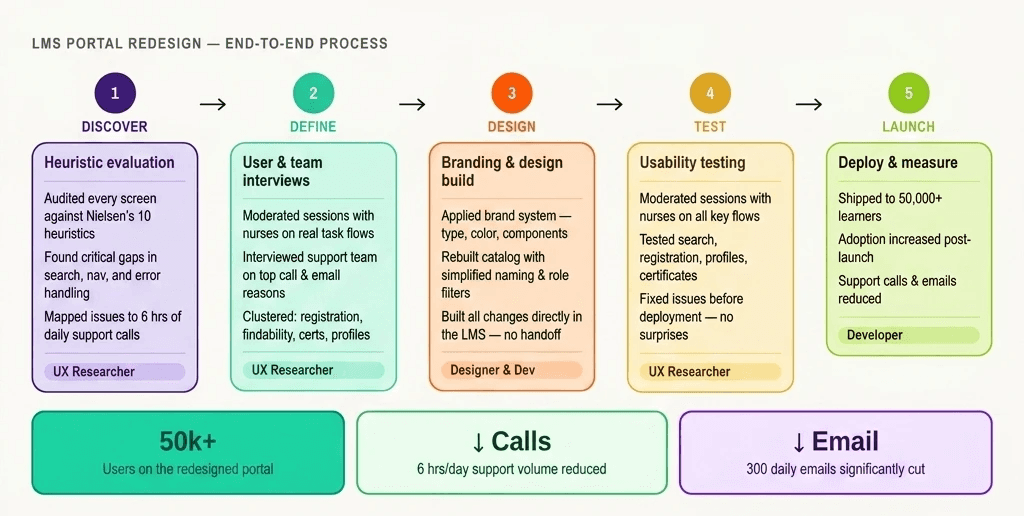


The Design Solution

CONCLUSION Redesigning the LMS portal end-to-end — from research through deployment, transformed a platform that was generating daily operational burden into one learners could n, avigate independently. By addressing accessibility, findability, and trust in the experience, the redesign reduced support overhead and drove measurable adoption across a 50,000+ user base. METRICS 50,000+ users migrated to new registration process 13 nurses and clinicians participated in usability research 50% reducation in support calls 80% reduction in complaint emails 4 core pain points resolved: accessibility, findability, profiles, and certificates